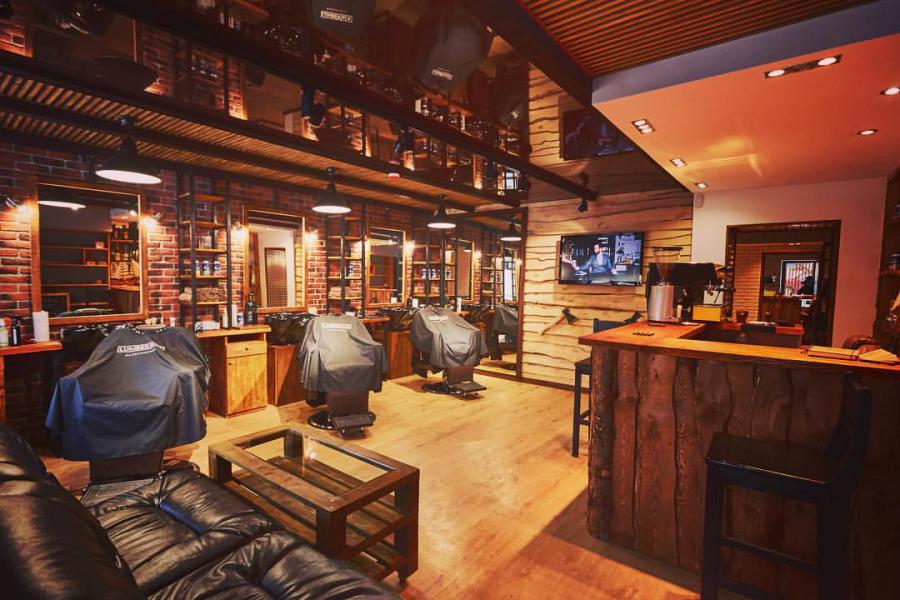
Men have always disliked women's beauty salons. It can be said with a high degree of confidence that the fairer sex's counterparts prefer to groom themselves in places free from female influence. Real men love visiting establishments such as https://lumberjack.style/ barbershops. One such establishment, the Lumberjack barbershop in Kyiv, offers its clients grooming services. The history of these venues dates back to ancient times. Over many centuries, this type of business has evolved, and today men have the opportunity to visit modern establishments with a truly masculine atmosphere.
What is a barbershop and how did it originate
The first men's hairdressers appeared in the territories of America and Europe around the 18th century. Although it is known that exclusively male establishments, where representatives of the stronger sex gathered, existed as far back as Ancient Rome. There, patricians and common people gathered to groom themselves and discuss important matters without fuss. The name barbershop derives from the Latin word barba, which translates to beard. A distinguishing feature of such salons has always been the complete absence of women, both among clients and among the masters serving them. In addition to hair care, barbershops in those times also performed minor medical procedures. These included small surgical operations, tooth extractions, cupping, and so on. Moreover, one could undergo a popular procedure such as bloodletting at a barbershop. It was precisely from bloodletting that the now well-known symbol of barbershops originated.
Even today, one can find a symbol in every barbershop: a rotating steel pole in three colours. The blue colour on such a pole symbolises veins, red – blood, and white represents the colour of sterility. And even in times when such a procedure was banned, only barbers continued to perform it. The practice of conducting such operations ceased around 1850. Since then, barbershops have only offered haircuts and procedures for grooming moustaches or beards. By the end of the 19th century, the men's salon business began to develop at an incredible pace, and soon barbershops or hairdressers could be found in all European cities. For such a number of salons, trade unions, as well as schools and other educational institutions teaching the art of hairdressing, were soon needed.









Comments
No comments yet. Be the first!