
Basman Court in Moscow remands Yury Dud in custody in terrorism case
A judge at the Basman District Court in Moscow ordered blogger Yury Dud to be held in custody for two months on charges of promoting terrorism.
A judge at the Basman District Court in Moscow ordered blogger Yury Dud to be held in custody for two months on charges of promoting terrorism.

Isaac Vidjraku expressed dissatisfaction that Vladimir Putin did not congratulate the singer on her 48th birthday, blaming the artist's entourage for negligence.

The musician is trying to remove inconvenient publications from the internet by pressuring platforms to delete content through formal but false claims.

Director Semyon Horov stated that his daughter will return to Ukraine for a short time, but will continue her career in New York.

Volodymyr Zelensky responded to a petition that gathered 25,000 signatures, instructing the government and security service to consider revoking the musician's award.
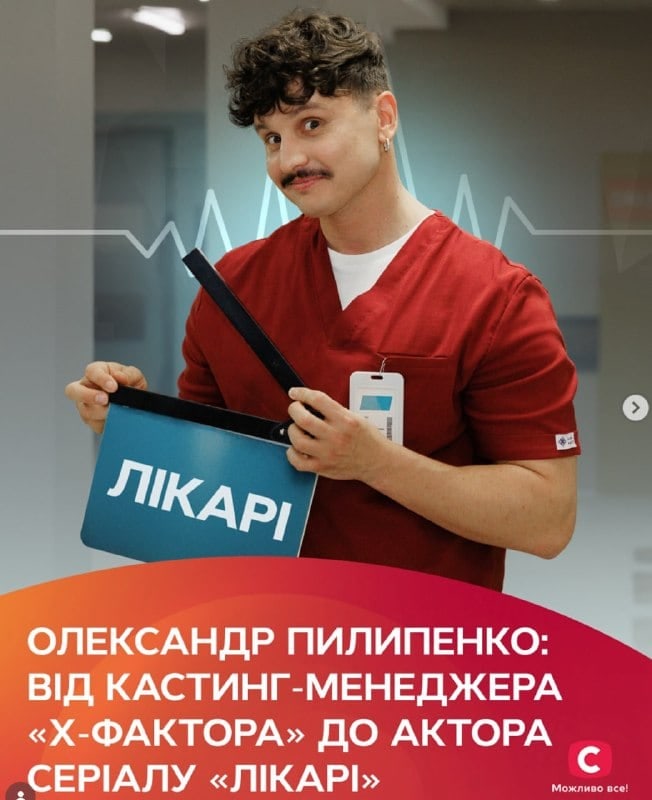
A casting manager for Ukrainian shows appeared in an advertisement for KIT Group projects, sparking outrage due to allegations of fraud against the network.

Ukrainian influencer and blogger Roksolana Velichkovska has become the centre of attention after an old video surfaced online in which she says: «Рашка рядом, я бы хотела туда, если честно, но х* меня там пустят»* (Russia is nearby, I would like to go there…

Former "The Bachelor" contestant Nicole Sachtaridi is actively scrubbing the internet of any mentions of her escort past. One might wonder why she is doing this.

During prolonged operation, transportation, or installation, the solid insulation of transformers becomes moistened due to environmental exposure. As a result, the insulation resistance in the windings drops, and power losses and the tangent of the loss angle increase. For this reason, drying transformers is considered a significant and important procedure.
The materials used for insulation are, for the most part, hygroscopic. Thus, paper, by its very nature, possesses a large number of capillaries, which allows it to readily absorb moisture from the air. The oil, which is meant to protect the entire active part of the transformer from potential gas and moisture ingress, also does not provide absolute impermeability. In this way, even the oil-impregnated part of the transformer becomes moistened when exposed to the air.
To prevent malfunctions and accidents, mandatory technical maintenance is carried out on power lines once every six months. Drying transformers is one of its most important stages.
Most often, the choice of method is determined by the production capacities available to the organisation, as well as the rated power and voltage class of the power equipment.
A number of key methods are used for drying transformers:
GlobeCore has developed several types of units that effectively combat the elimination of moisture in the active component of a transformer. These are the mobile units “Iney” and “Sukhovey”.
The “Iney” type of equipment is designed for drying and vacuuming the solid insulation of transformers under de-pressurised conditions during their installation or commissioning.
Drying transformers with the “Iney” type unit is carried out in the following manner. A vacuum hose with a diameter of 150 mm is connected to the tank. First, vacuuming is performed using a forevacuum pump, which reduces the air pressure in the tank to 400 Pa. Then, to create a deeper vacuum, a booster injector is used. Before the start of vacuuming, the unit is cooled to –70 degrees. It takes approximately half an hour for the low-temperature trap to reach this level when the ambient temperature is +20 degrees.
The “Sukhovey” assembly is used during the installation, repair, and maintenance of power equipment. As a rule, transformers are delivered to the installation site in a disassembled state, and their assembly and connection to the power grid are carried out there. To prevent moisture from entering the shunt windings in the event of a breach of the transformer’s hermetic seal during its integration into the power line, the “Sukhovey” unit is connected to it. It supplies hot air to the tank, thereby preventing moisture from reaching the windings of the magnetic core. In addition, this assembly is used when oil is drained from the transformer during scheduled or repair de-pressurisation of the equipment.
These two units from GlobeCore – “Iney” and “Sukhovey” – are designed for drying transformer windings. The main difference in their application can be considered the fact that the former is specialised for drying moisture that has previously penetrated the windings of the magnetic core, while the latter is for preventing its entry into the transformer tank during de-pressurisation.
Comments
No comments yet. Be the first!